

Scout Comics has been on a winning streak lately. With their series THE MALL being optioned for TV, and April’s premier of ELECTRIC BLACK generating buzz among readers and speculators, Scout has established itself as a powerhouse among indie publishers.
This week, Scout debuts a promising new series, CATEGORY ZERO, written by Adam Kiamil, with art by Ton Lima, and colors by Derek Dow. According to Kiamil, the creator, the target audience for this series is those “who grew up reading comics like X-MEN and HARBINGER, but whose tastes have moved away from the traditional superhero genre.”
What’s CATEGORY ZERO about?
Earth’s entire population is infected with the Strix virus. First discovered by scientists at Sanaxus research 20 years ago, the virus and its symptoms manifest in one percent of the population. At the onset of the virus, these “One Percenters” experience flu-like symptoms before abruptly developing superhuman abilities — either physical or mental.
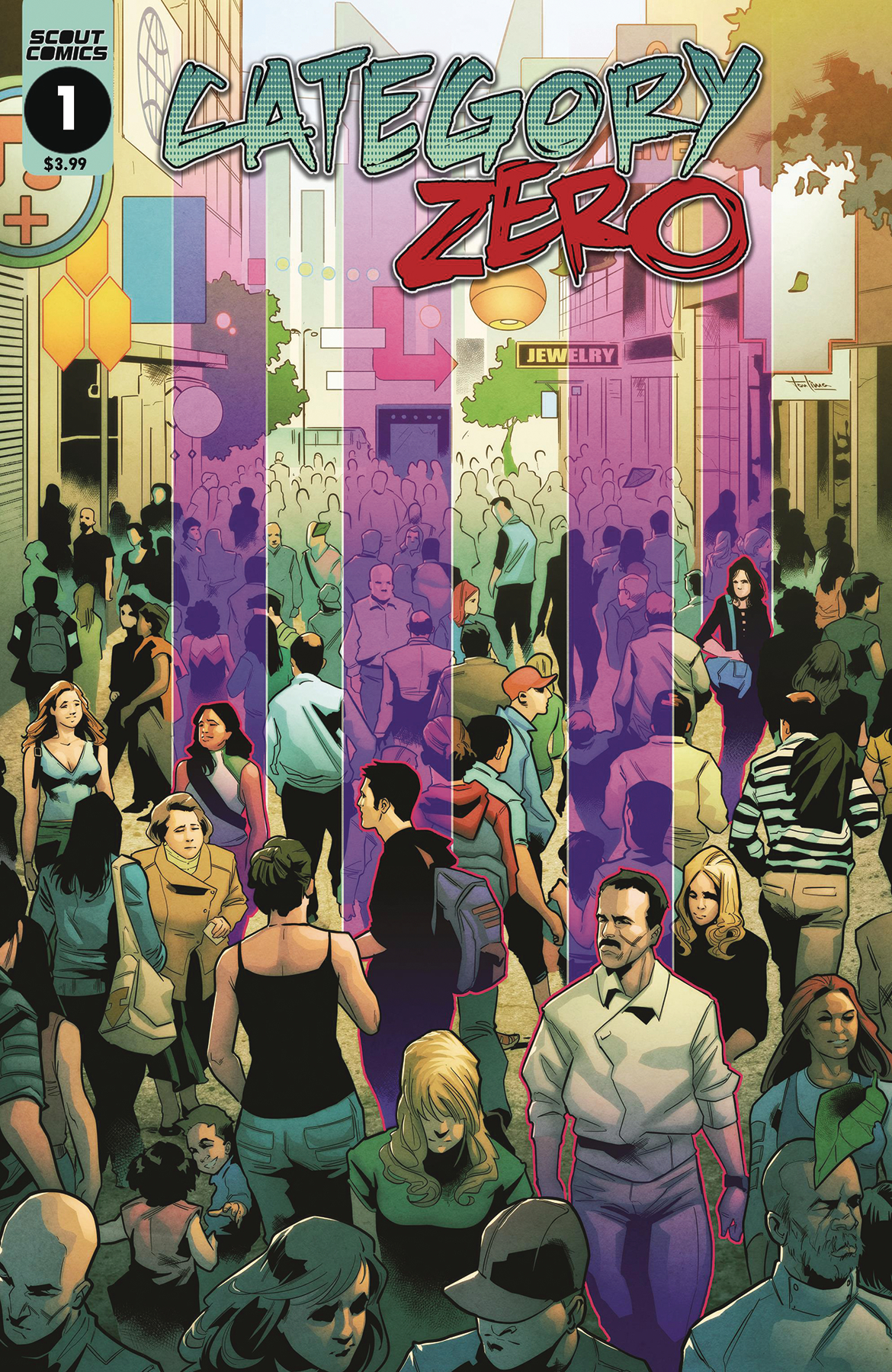
In most cases, these powers are harmless, but sometimes, One Percenters pose a threat to the general populace. To treat and study the virus, Sanaxus has developed secure research facilities where known One Percenters live together in suburban-looking communities. As always in the suburbs, things aren’t what they seem.
What’s issue one of CATEGORY ZERO about?
In the opening pages of CATEGORY ZERO, we travel back in time 20 years to meet Phillip Patterson, one of the original Strix researchers at Sanaxus. He has recently been promoted, but suddenly dies at the congratulatory surprise party celebrating his achievement.

With his dying breath, Phillip confesses to his son, Jake (also a Sanaxus researcher), that “Strix isn’t what they say it is.” When Phillip says “they,” I assume he’s referring to Sanaxus, and that whatever they’re lying about will be the engine for the plot in CATEGORY ZERO.
In the present day, Professor Sarah Higgs delivers a lecture on the Strix virus to college students — a seamless way for Kiamil to provide context. One of her students, Neve (who will likely take on a larger role in the series following issue one) asks about her husband and his former professor, Leonard Higgs, a One Percenter receiving treatment at Eden, a Sanaxus facility.
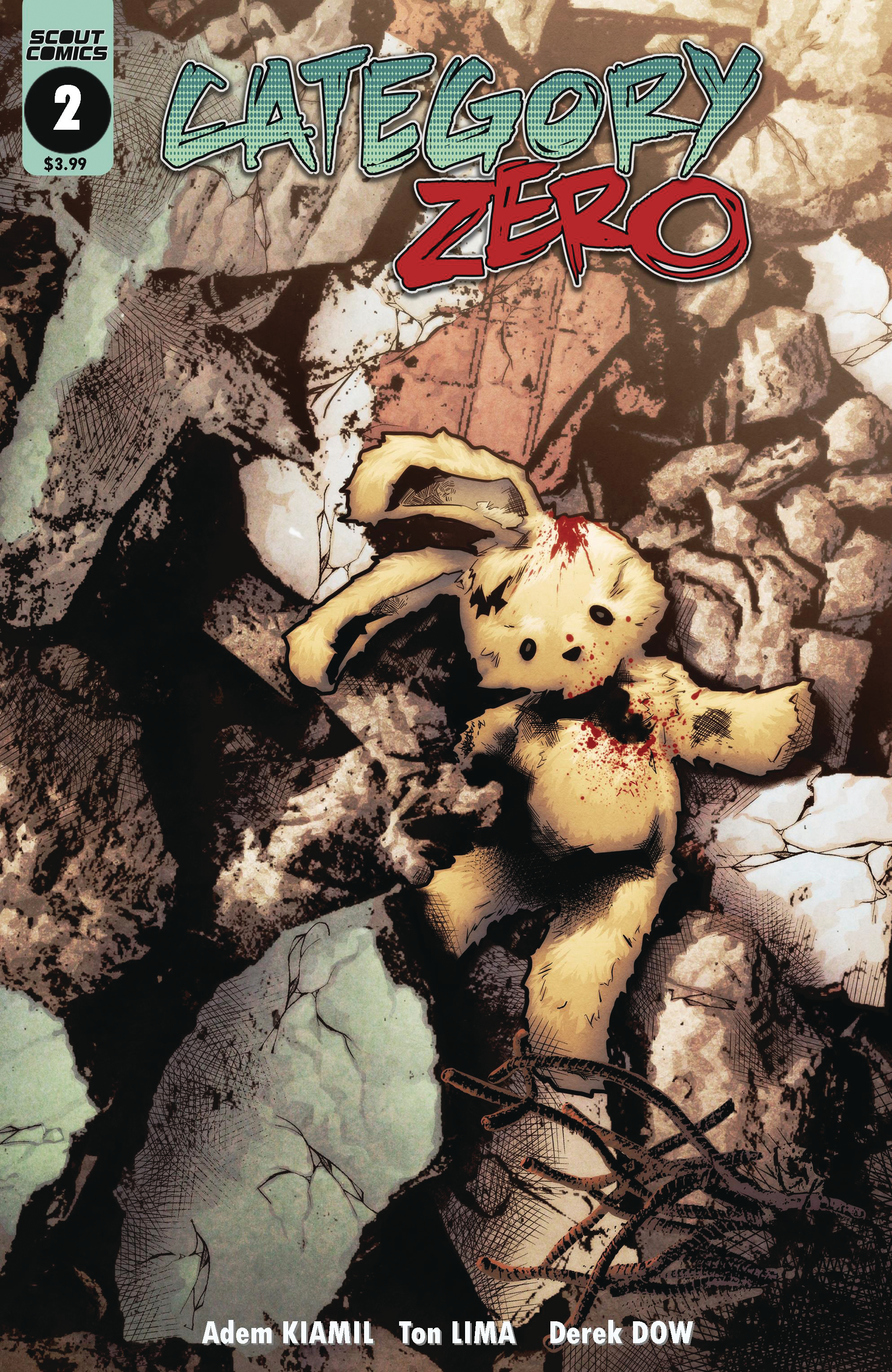
After Sarah and her daughter visit Leonard at Eden, they stop by Arrowbank. While waiting in line, they encounter an ill-looking man coughing uncontrollably. His flu-like symptoms escalate until his hand tremors. Suddenly, the entire building is shaking as if there were an earthquake. Arrowbank collapses, presumably killing everyone inside.
How’s the reading experience?
In 2019, Americans are, more than ever, considering the experience of marginalized “others” — those who are always disadvantaged, sometimes poor, and generally not part of mainstream society. As such, One Percenters are segregated into isolated communities, further away from the rest of the population who struggle to understand them.
In this way, THE BEAUTY and X-MEN are taken up in CATEGORY ZERO; themes like social exclusion, mutation, viruses, and intervention by governments and corporations are at the forefront. All of this makes the story an ambitious undertaking. Unfortunately, that ambition doesn’t come through in the execution, which feels mostly flat.
The plotting and world-building are the strongest features of this series debut. I liked the multiple timelines in issue one of CATEGORY ZERO, and am curious to see how the past shapes the events I’ll witness as I continue to read .

At the dialogue level, however, the writing was sometimes corny — particularly in the scene where Sarah, Leonard, and their daughter reunite. As a relentless grammarian, I noticed that there were minor blemishes in punctuation and sentence structure; when comics don’t have an editor credited, this is often the case.
Art in CATEGORY ZERO
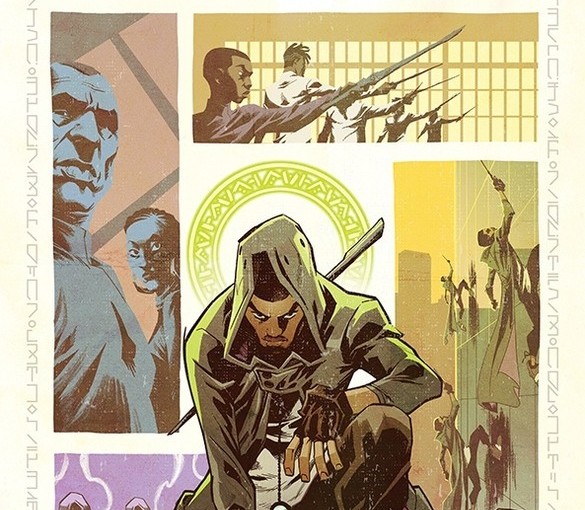
Generally, the art was impressive and unique. The triangular facial structure of the characters reminds me characters in SUPERIOR SPIDER-MAN by artist Mike Hawthorne. There were impressive backgrounds in larger panels, where the chunky lines gave the art satisfying weight and texture. The color pallet had a muted, sickly green color, which felt entirely appropriate. Overall, though, the art could be more detailed.
Should you invest in the CATEGORY ZERO series?
CATEGORY ZERO is a consistently-paced, somewhat satisfying read sandwiched by two cliffhangers at the beginning and end. I am slightly curious to see where the creators take this series. If the series benefits from more focus, editing, and plotting, I can easily imagine TV and film producers throwing money at the concept.
Rating
6.5 / 10
- Solid storytelling
- Timely themes
- Immersive intrigue
- Lack of attention to detail














 Secret Society Comics