What Went Wrong in “Nomen Omen” #1?

Written by Marco B. Bucci
Art and Colors by Jacopo Camagni
Letters by Fabio Amelia (Arancia Studio)

“Nomen Omen” #1 from Image Comics is a supernatural/fantasy/horror comic that is equally disturbing and confusing. Brought to life by a team of Italian creators, there were a few things lost in translation — and it’s not because of language differences. This is a comic that is too smart for its own good.

In typical Italian fashion, “Nomen Omen” #1 opens with a lusty pretext. (My grandmother immigrated to NYC from Sicily, so I am somewhat qualified to call Italians a lusty people.) Two young women hit the road after they were caught bathing in the moonlight, naked (of course). There’s some other confusing details about their families and plans for the future before they discover the car crash that will kickstart the story into motion.

I’m not here to give you a panel-by-panel recap of “Nomen Omen” #1. But I feel that these first four pages — arguably some of the most important pages in the first issue of a series — represent a larger problem of this story: all of the disorientation that Bucci creates makes it hard to invest in the characters and their story.

The story is punctuated with vague incantations talking about some ominous future, which can be exhilarating and leaving you wanting to know more. There’s some very sexual panels, and very violent ones. There is an entire page of poetry, framed inside a glowing moon, which spoke to the nerdy English major within me. If you’re patient enough to parse the verses, you’ll find some foreshadowing that can help you see through the fog in the coming pages.

Fabio Amelia’s letters bring the story to life. He uses variations in font size, word bubble outlines, color of sound effects to give this story an edge. In a double page splash that depicts the inciting incident in the story, his sound effects rhythmically guide your eyes across the page, and give the action a tribal quality with the repeated “tum” drumming sound. When the evil character speaks at the end of the book, his words are coated in black, outlined by a wobbly bubble that gives his speech a guttural, dark quality.

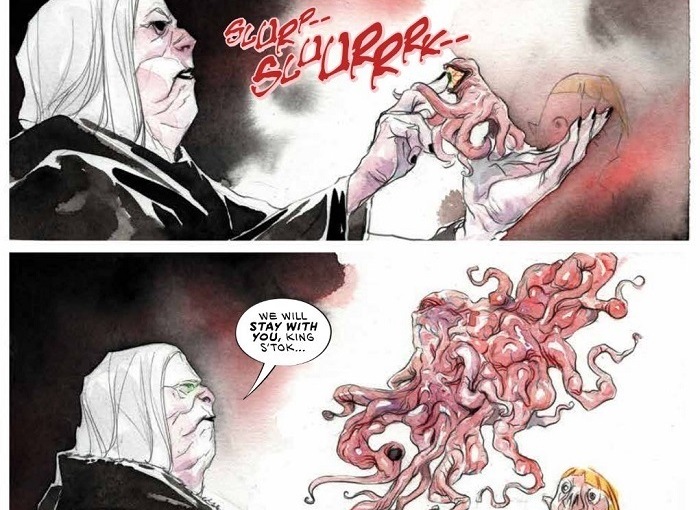
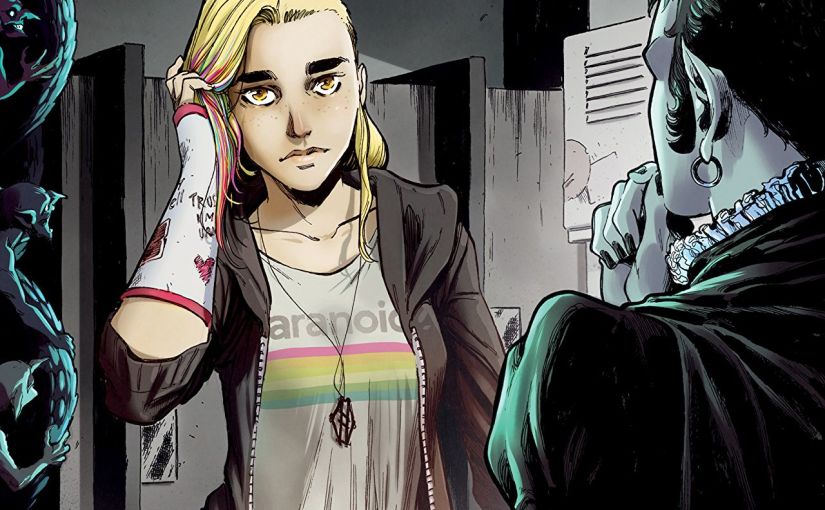
The art from Jacopo Camagni in “Nomen Omen” #1 has a unique interpretation of manga style, and some of the page/panel layouts are spectacular. The latter half of the book is predominantly black and white, with the exception of a bright, beating heart and pink fur in two consecutive pages. Camangi knows how to create a dramatic, disturbing sequence of action that really move the story forward in the direction Bucci is trying to guide it.

My favorite part about his art is all the attention to detail. In one panel inside the protagonist’s home, her photo wall reveals that she won the Google Science Fair and that her parents support the All Genders Matter movement. This quickly conveys characterization, with no dialogue or captions required. For all his attention to detail in bringing the story elements to life, Camangi barely did any crosshatching, which is a classic way to convey dimension in skin and fabrics. The lack of gritty, fine lines makes some panels fall flat, but Camagni’s expertise in using color for lighting/shadow while masterfully illustrating perspective makes up for that shortage.

And then there’s the incorporation of instagram in the story. I often feel that comic books (and the entertainment industry in general) haven’t found impactful ways to integrate technology into the plots of regular stories (in a more casual way than Black Mirror does). An entire page of the comic resembles an instagram feed, and at the bottom it displays the instagram handle @_nomen.omen_. There is no sign of these panels on that instagram page, and I’m perplexed as to how that account relates to the story — aside from the posts of the rainbow birthday cake, which was featured in the comic.

The artistic features of this story are truly something to behold, and if you’re patient enough, I think Bucci’s writing will find its footing in the issues to come.
Review: Something is Killing the Children #1

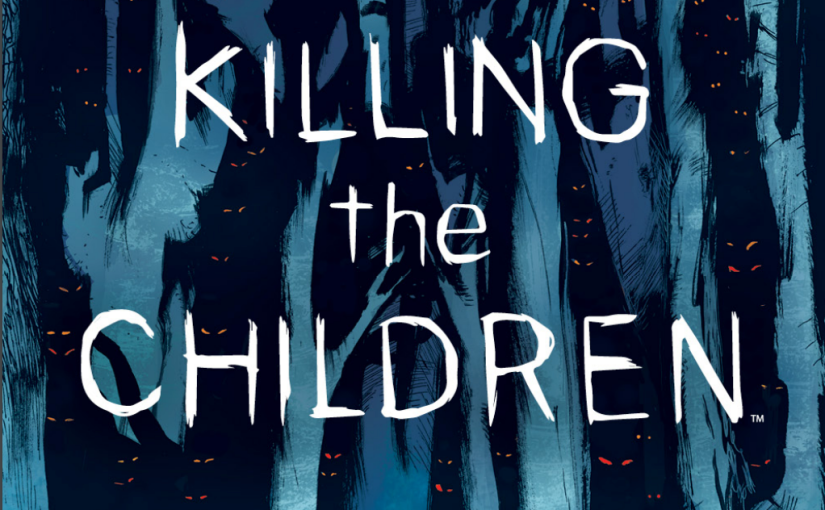
Nine kids have died, and dozens are missing in Archer’s Peak, Wisconsin. With Something is Killing the Children #1, BOOM! Studios brings us the best horror comic I’ve read all year. In every page, the paranoia is palpable, and each character feels a sense of isolation and doubt.

James, the protagonist, finally made the kind of friends you’d have sleepovers with. On the night of one of those sleepovers, they all die in the woods — moments after he tells them a true (?) story about a monster that resembles the thing that killed them. When James describes the events of that night to the police, he reveals that the story he told his friends during Truth or Dare was made up.

He’s also lying to the cops, and says that he didn’t see anything that night. That he only heard the massacre. Writer James Tynion IV has given us an unreliable narrator to convey this horrific story, and I’m skeptical of everything he says — even though I empathize with him.

Part of the reason I have a complex relationship with this protagonist is because of Werther Dell’Edera’s humanizing art, and Miquel Muerto’s consistently immersive colors. The story is interspersed with extreme closeups that convey anguish, confusion, and sorrow. Distinct hatching adds weight to these facial expressions, and creates shadows that support the mood and atmosphere.

Together, these two artists have created a unique interior style that is unlike anything I’ve gazed upon in recent memory. Particularly, they use two consecutive double-page spreads to show every gory detail of what really happened that night in the woods. (I’ll save that experience for when you pick up the book, but here’s a similar spread below.)

Supporting the gestural brushstrokes and muted watercolors of blue, green, purple, and yellow are Andworld Design’s letters. In a scene where one of James’ classmates accuses him of murdering his friends because he’s gay and was experiencing unrequited love, James says “Shut up” in gray letters that are slightly smaller than the others on the page. Further down that page, he screams in frustration, “SHUT THE FUCK UP!” Without this contrast, that raw moment of would have lost its effect.

There was only one flaw I noticed in the whole pilot to this gripping series. Earlier in the book, we learn that James’ three dead friends are named Karl, Robbie, and Noah. At the end of the book, when we see the flashback of the massacre, James calls Robbie Tyler. I reread the issue three times to sort this, and still have no answers. I’m assuming it’s a mistake, but will confirm it as I continue to invest myself in this horror tale.

This isn’t just a horror story, though. It’s an analog for how school shootings have damaged our national conscience, how the news ineffectually covers the epidemic, and how police are ill-equipped to combat the problem.

Throughout the debut issue, Tynion’s dialogue resonates with a nation grappling with the reality that children are killing each other, with more and more frequency, more audacity. Here’s a quote from the comic that sums it up: “…the world makes a lot less sense than it used to. And every day that feeling gets a little worse.”

Rating: 4 out of 5.

Top 5 Releases of 2019 (So Far!)

Alright, it’s June!!! Halfway thought the year, and we have so many exciting new releases already. I wanted to take the time to tell you what I’m currently freaking out over and what has my full attention.

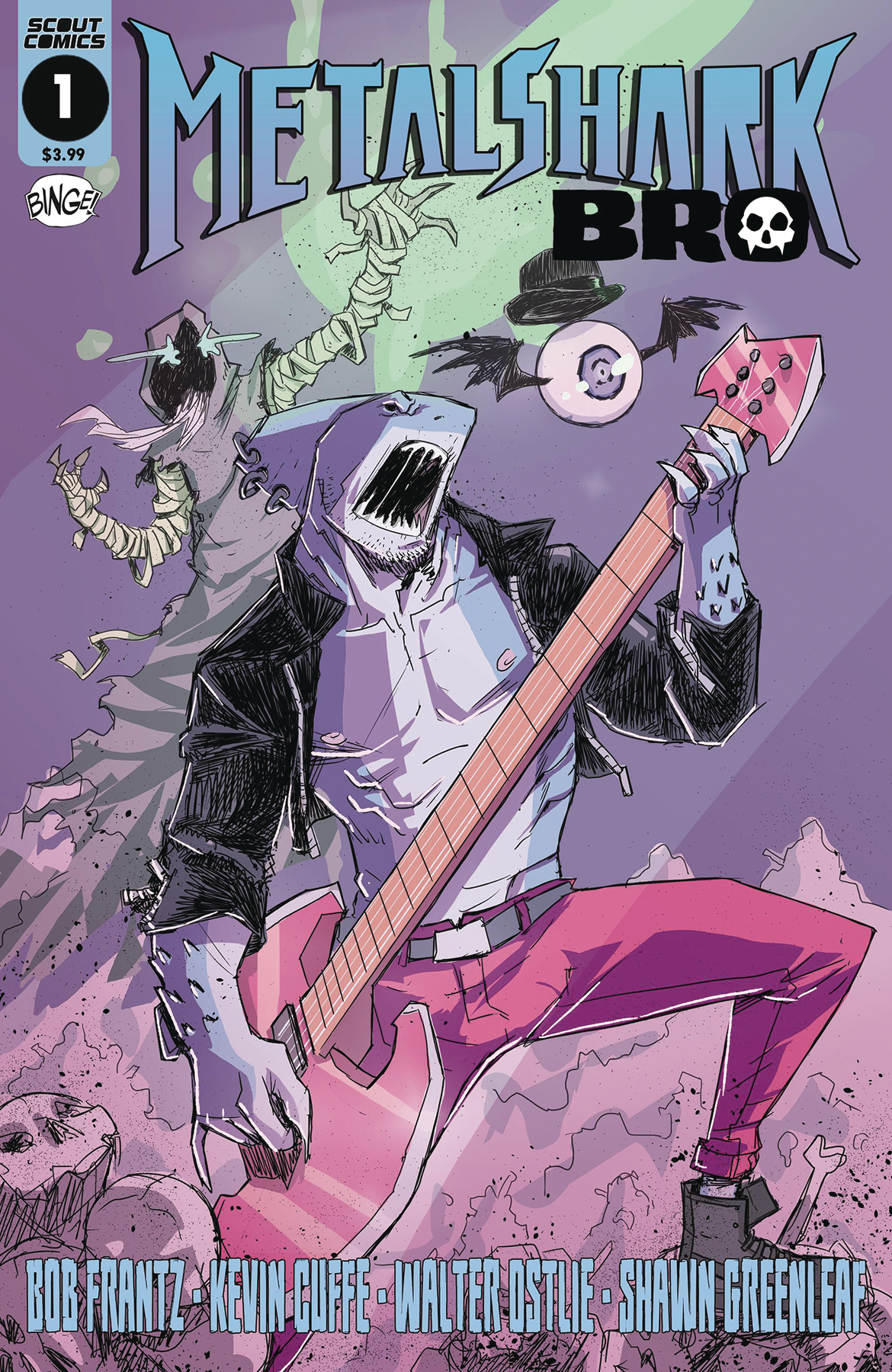
5. METALSHARK BRO by Bob Frantz, Kevin Cuffe, & Walt Ostlie

This new Scout Comics release was only sold as a single issue, with the rest of the story being released as a trade on July 31st this year. It’s a really fun story about a Shark who eats a man who’s meant to claim all the souls that pledged allegiance to Satan. As punishment, the Shark becomes anthropomorphized and has to kill all the people who swore their lives to Satan. Until he is done with his task, he can’t become a regular shark again. The premise for this comic is wild, and it’s a very entertaining read.

4. GHOST TREE by Bobby Curnow & Simon Gale

This IDW series is a four-part mini that tells the story of a man who returns to his grandpa’s house 10 years after his death to meet beneath a certain tree, like his grandfather asked of him. When he arrives at the tree, he sees his grandfather’s ghost — along with all of his ancestors! It’s a really beautiful story that has a suspenseful arc underlying the main plot. We’re only half way through, so my eyes are glued to the calendar as I await issue #3. 

3. BATMAN: LAST KNIGHT ON EARTH by Scott Snyder & Greg Capullo

I consider Snyder and Capullo to be legendary Batman creators at this point; their stamp is firmly set onto the history of Batman. This is the last dance, the final hurrah, the curtain call for Snyder and Capullo. Of course, they’re going to hit us with some crazy plot to put Bruce Wayne through the ringer. Only one issue in and I am chomping at the bit to get the next issue. (Don’t be surprised if you see this on my end of the year list.)

2. SPIDER-MAN: LIFE STORY by Chip Zdarsky & Mark Bagley

This is an amazing read. Go get it right now if you haven’t. This is not your typical Spidey story. Chip Zdarsky masterfully weaves modern American history into a history of Spider-Man told in real time. The book is cute, and funny at first, right up until the end of issue one when Flash Thompson volunteers to go fight in the Vietnam War. Don’t be surprised if you cry while reading. 

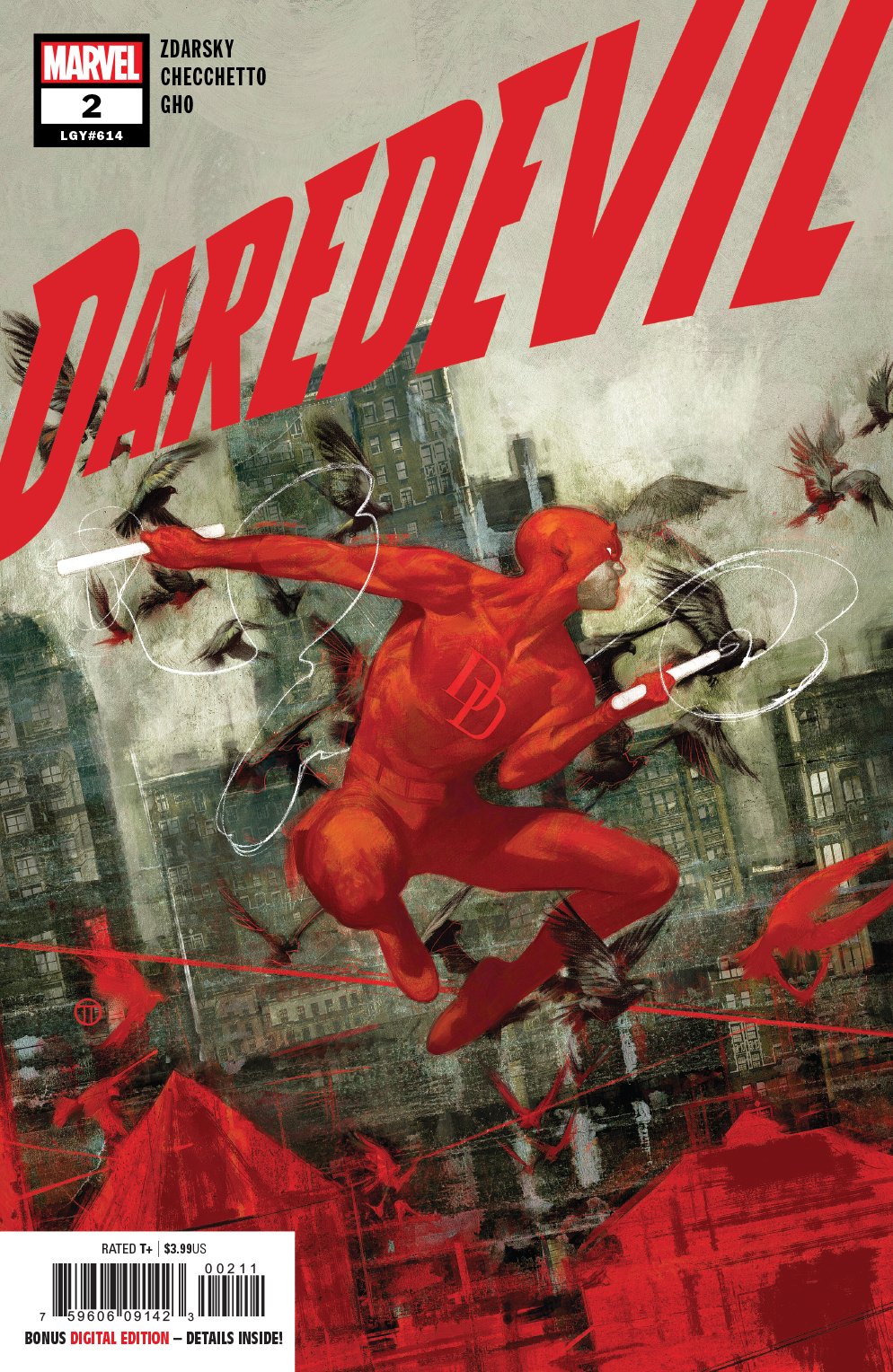
DAREDEVIL by Chip Zdarsky & Marco Checcetto

I consider this to be the best book out right now. Matt Murdock is framed for murder. It isn’t clear if he did or he didn’t commit the crime. Matt certainly doesn’t think he did, and that fact that even readers aren’t sure yet makes you feel so involved with the story. Additionally, Marco Checcetto’s interior work is some of the best Daredevil art I’ve ever seen. On top of that smorgasbord of awesome, the always-incredible Julian Tedesco is drawing the covers. If anything else I hope that by end of this read you pick up Daredevil. Trust me it’s the best thing out right now and you can take that straight to the bank!

6 Comics to Pick Up This Week (06/12/19)

BATMAN WHO LAUGHS #6 (of 7)

DC Comics
(Writer) Scott Snyder (Artist) Jock (Variant Cover Art) Jenny Frison

Mini-series extended to 7 issues. Features stunning cover by super-star, Jenny Frison.

EVENT LEVIATHAN #1 (OF 6)

DC Comics
(Wr) Brian Michael Bendis (A/CA) Alex Maleev

Monthly mini-series spans the DC Universe and threatens to bring every character to their knees.

SILVER SURFER BLACK #1 (OF 5)

Marvel Comics
(Wr) Donny Cates (A/CA) Tradd Moore

After Silver Surfer is “blown” through a black hole, he has to fight to save his soul in order to survive. Donny Cates, writer of COSMIC GHOST RIDER, is sure to make this a story you’ll never forget. There are 12 covers for this trippy series debut.

VENOM #15

Marvel Comics
(Wr) Cullen Bunn (A) Iban Coello, Alberto Jimenez Alburquerque (CA) Kyle Hotz

This WAR OF THE REALMS tie-in should be an incredible read. Goblins, Giants, and Symbiotes? OH MY!

ARCHIE #705: ARCHIE & SABRINA PART 1)

Archie Comic Publications
(Wr) Nick Spencer (A) Sandy Jarrell (CA) Veronica Fish

This issue introduces the beginning of a new story arc: a romance between Archie and Sabrina the Teenage Witch!

SONATA #1 CVR A HABERLIN & VAN DYKE (MR)

Image Comics
(Wr) David Hine, Brian Haberlin (A/CA) Brian Haberlin, Geirrod Van Dyke

This issue introduces the world of a peace-loving people meeting a group of war-mongers in a land that belongs to neither, and a girl who is willing to put everything on the line to find her own path somewhere amidst the chaos.

Review of CATEGORY ZERO #1 from Scout Comics

Scout Comics has been on a winning streak lately. With their series THE MALL being optioned for TV, and April’s premier of ELECTRIC BLACK generating buzz among readers and speculators, Scout has established itself as a powerhouse among indie publishers.

This week, Scout debuts a promising new series, CATEGORY ZERO, written by Adam Kiamil, with art by Ton Lima, and colors by Derek Dow. According to Kiamil, the creator, the target audience for this series is those “who grew up reading comics like X-MEN and HARBINGER, but whose tastes have moved away from the traditional superhero genre.”

What’s CATEGORY ZERO about?

Earth’s entire population is infected with the Strix virus. First discovered by scientists at Sanaxus research 20 years ago, the virus and its symptoms manifest in one percent of the population. At the onset of the virus, these “One Percenters” experience flu-like symptoms before abruptly developing superhuman abilities — either physical or mental.

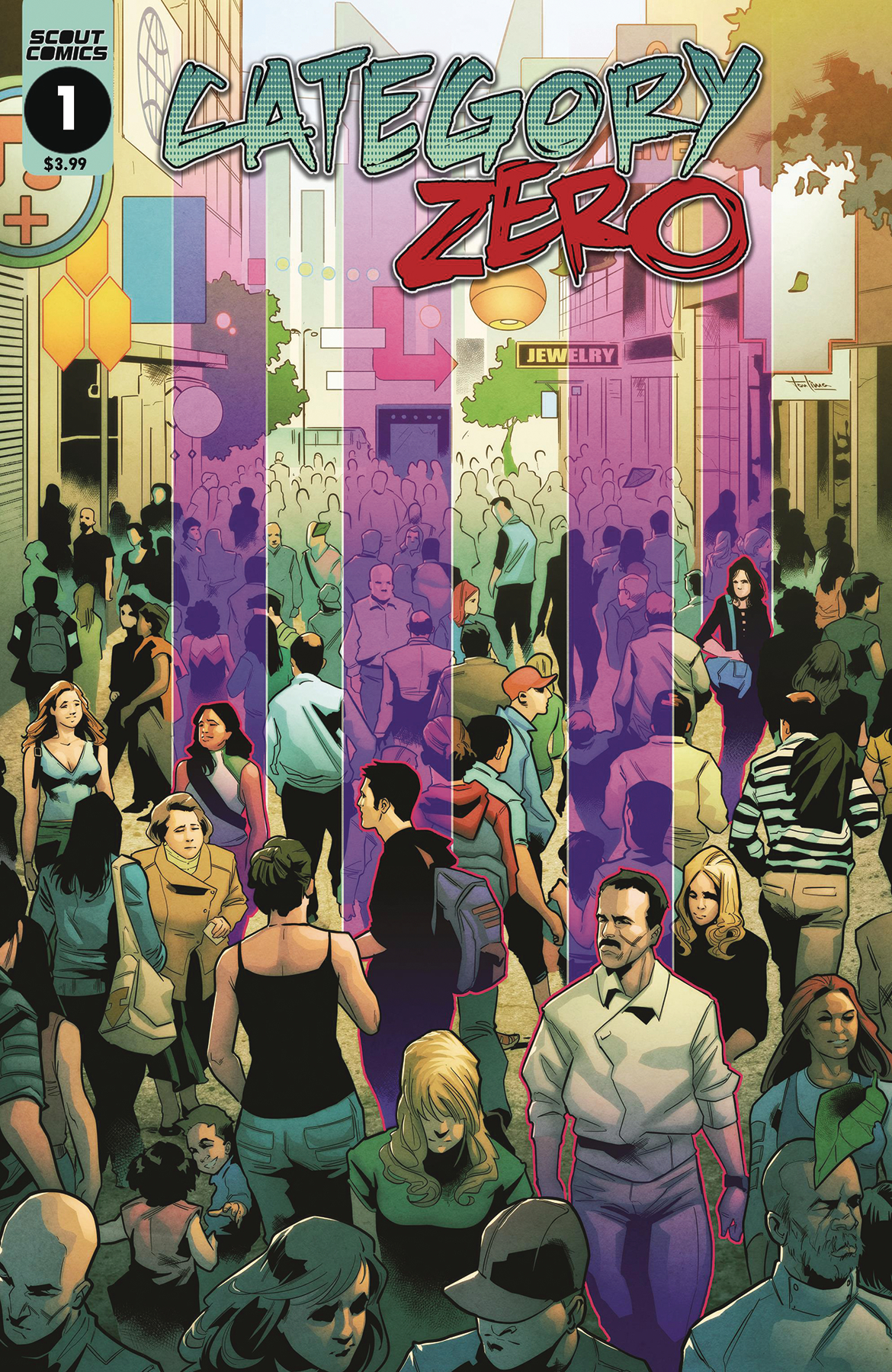
The clever cover of CATEGORY ZERO #1.

In most cases, these powers are harmless, but sometimes, One Percenters pose a threat to the general populace. To treat and study the virus, Sanaxus has developed secure research facilities where known One Percenters live together in suburban-looking communities. As always in the suburbs, things aren’t what they seem.

What’s issue one of CATEGORY ZERO about?

In the opening pages of CATEGORY ZERO, we travel back in time 20 years to meet Phillip Patterson, one of the original Strix researchers at Sanaxus. He has recently been promoted, but suddenly dies at the congratulatory surprise party celebrating his achievement.

Phillip Patterson in his final moments.

With his dying breath, Phillip confesses to his son, Jake (also a Sanaxus researcher), that “Strix isn’t what they say it is.” When Phillip says “they,” I assume he’s referring to Sanaxus, and that whatever they’re lying about will be the engine for the plot in CATEGORY ZERO.

In the present day, Professor Sarah Higgs delivers a lecture on the Strix virus to college students — a seamless way for Kiamil to provide context. One of her students, Neve (who will likely take on a larger role in the series following issue one) asks about her husband and his former professor, Leonard Higgs, a One Percenter receiving treatment at Eden, a Sanaxus facility.

After Sarah and her daughter visit Leonard at Eden, they stop by Arrowbank. While waiting in line, they encounter an ill-looking man coughing uncontrollably. His flu-like symptoms escalate until his hand tremors. Suddenly, the entire building is shaking as if there were an earthquake. Arrowbank collapses, presumably killing everyone inside.

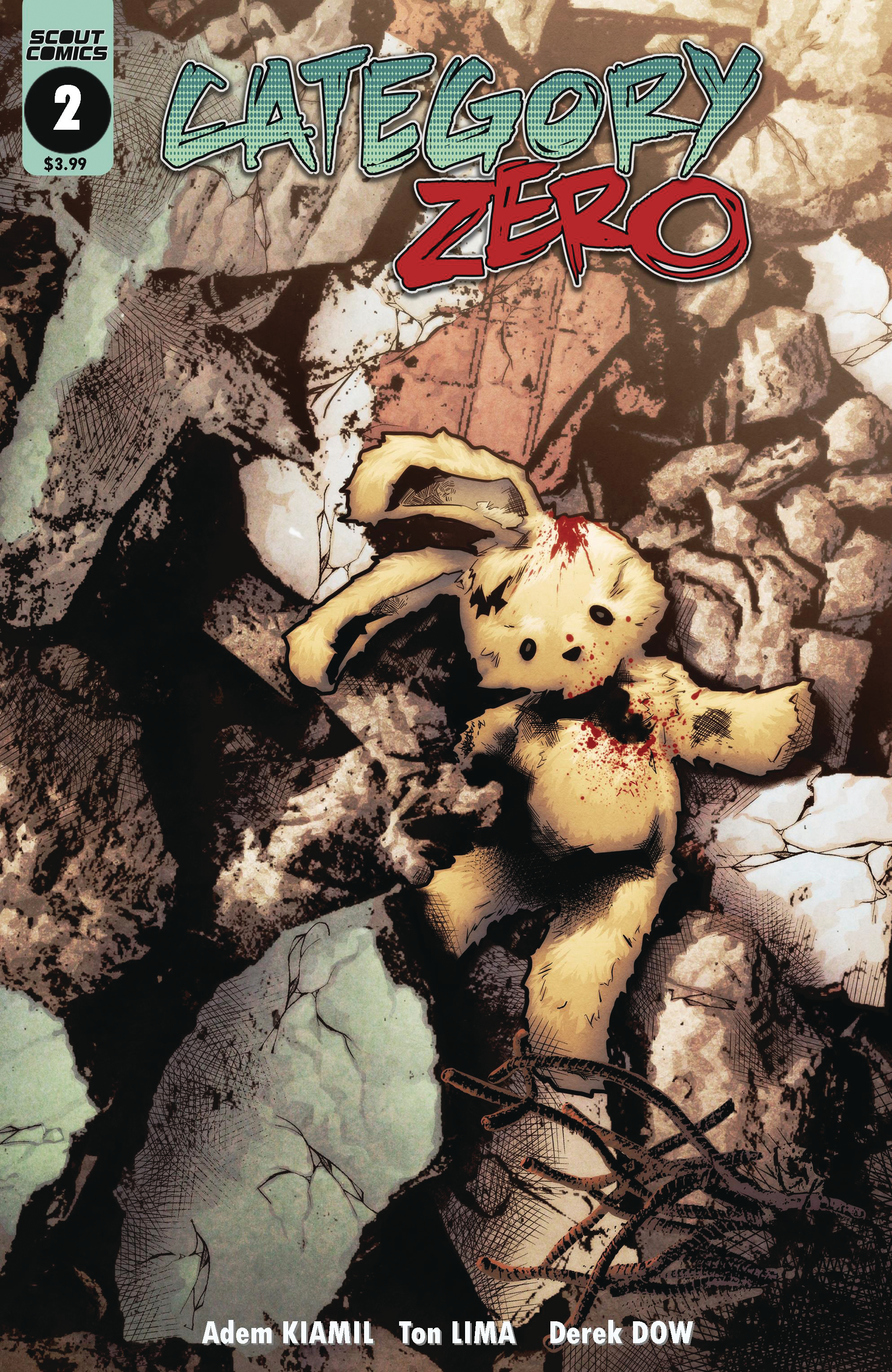
The cover for CATEGORY ZERO #2 is similar to the final panel in issue one.

How’s the reading experience?

In 2019, Americans are, more than ever, considering the experience of marginalized “others” — those who are always disadvantaged, sometimes poor, and generally not part of mainstream society. As such, One Percenters are segregated into isolated communities, further away from the rest of the population who struggle to understand them.

In this way, THE BEAUTY and X-MEN are taken up in CATEGORY ZERO; themes like social exclusion, mutation, viruses, and intervention by governments and corporations are at the forefront. All of this makes the story an ambitious undertaking. Unfortunately, that ambition doesn’t come through in the execution, which feels mostly flat.

The plotting and world-building are the strongest features of this series debut. I liked the multiple timelines in issue one of CATEGORY ZERO, and am curious to see how the past shapes the events I’ll witness as I continue to read .

Released covers for CATEGORY ZERO #3 suggest that Sanaxus has a hidden agenda for the Strix virus and the affected One Percenters.

At the dialogue level, however, the writing was sometimes corny — particularly in the scene where Sarah, Leonard, and their daughter reunite. As a relentless grammarian, I noticed that there were minor blemishes in punctuation and sentence structure; when comics don’t have an editor credited, this is often the case.

Art in CATEGORY ZERO

Generally, the art was impressive and unique. The triangular facial structure of the characters reminds me characters in SUPERIOR SPIDER-MAN by artist Mike Hawthorne. There were impressive backgrounds in larger panels, where the chunky lines gave the art satisfying weight and texture. The color pallet had a muted, sickly green color, which felt entirely appropriate. Overall, though, the art could be more detailed.

Should you invest in the CATEGORY ZERO series?

CATEGORY ZERO is a consistently-paced, somewhat satisfying read sandwiched by two cliffhangers at the beginning and end. I am slightly curious to see where the creators take this series. If the series benefits from more focus, editing, and plotting, I can easily imagine TV and film producers throwing money at the concept.

Rating

6.5 / 10

  • Solid storytelling
  • Timely themes
  • Immersive intrigue
  • Lack of attention to detail

6 Comics to Pick Up This Week (06/05/19)

JUSTICE LEAGUE #25 — DC Comics

(Writer) Scott Snyder & Various (Artists) Jorge Jimenez, Javi Fernandez (Cover Artist) Jorge Jimenez

This issue is the prelude to “Year of The Villain” DC Event.

DCEASED #2 (OF 6) HORROR VARIANTDC Comics

(Writer) Tom Taylor (Artists) Trevor Hairsine, Stefano Guadiano (Cover Art) Yasmine Putri

Features A Nightmare on Elm Street homage variant cover.

WAR OF THE REALMS #5 (OF 6)Marvel Comics

(Writer) Jason Aaron (Artist) Russell Dauterman (Cover Artist) Arthur Adams

This issue is the “climax” of story and the continuation of Marvel’s main Spring event.

BLACK CAT #1 (Regular Cover & Artgerm Variant) — Marvel Comics

(Writer) Jed MacKay (Artists) Travel Foreman & Various (Cover Art) J. Scott Campbell

(Variant Cover Art) Stanley “Artgerm” Lau

This issue launches the new Black Cat ongoing series.

THUMBS #1 (OF 5)Image Comics

(Writer) Sean Lewis (Art / Cover Art) Hayden Sherman

This is the premier issue of Black Mirror-esque mini series from two acclaimed creators.

CATEGORY ZERO #1 — Scout Comics

(Writer) Adem Kiamil (Art) Tom Lima

The debut issue of new series, which is limited to a small print run.

Review of SHE SAID DESTROY #1 from Vault Comics

What’s SHE SAID DESTROY issue one about?

Good versus evil is a classic comics trope. That formula gets a lot more interesting when traditionally evil forces are on the same side as the good guys. Enter the Goddess of death and queen of fairies, The Morrigan.

She is one of the two remaining Gods from her pantheon, who were forgotten and erased. Her only remaining sister, Brigid (Goddess of the Sun) has persuaded the entire solar system into devoutly following her, using the force of inspiration. The Morrigan and her people, who reside in the colony of Fey, are the last obstacle in her quest for domination.

The Sun Goddess, Brigid, about her flagship, The Inspiration.
The Sun Goddess, Brigid, aboard her flagship, The Inspiration.

The only thing stopping Brigid from conquering The Morrigan and converting her followers are Jackelyn (a galactic witch), Winona (the princess of Fey), and her best friend, Raul.

How’s the reading experience?

On the first page, author Joe Corallo implies that because “some gods wanted more,” “cultures were homogenized and erased.” No details of this backstory come through in the issue, but it affirms that Brigid is the antagonist; in her crusade to get every person to conform to her worldview, Brigid has effectively erased the many cultures of the solar system.

Page one of SHE SAID DESTROY introduces the reader to the history of this fantasy universe.

It’s clear the Brigid is motivated by the fate of the other gods: she fears being forgotten as they were. This premise is not entirely unique, and I did not feel an attachment to Brigid and The Morrigan. Their characterization, motivation, and relationship to each other rung hollow.

The apparent protagonist of the series, Winona exudes strong Jon Snow vibes — noble, skilled, and persistent, but somewhat uncomfortable in the spotlight. Much like Brigid and The Morrigan, unfortunately, Winona’s personality is one-dimensional. She is kind to everyone, a good friend, and appreciative of life, but neither Corallo, Kangas (artist), nor Nalty (colorist) indicated that she has endured trauma, or is capable of being anything but good.

Introduction of Winona, and her friend, Raul, who is jealous of her power and prominence in Fey.

This story has the pieces of a successful comics saga: space opera genre, with fantasy and sci-fi elements, conflicting belief systems about to be at war, and an inclusive cast of characters and creators. But did these pieces come together? Not in my opinion.

How’s the art in SHE SAID DESTROY?

Generally, the art in this debut issue parallels the quality of the storytelling: many flat colors, line-work that feels hasty and incomplete, and attempts to convey motion that feel static nonetheless. Often, I couldn’t clearly discern what I was viewing. Even if this visual disruption was intentional, it evoked no emotional response in me.

I will credit Kangas and Nalty with the ability to create imaginative worlds, expressive costumes, and memorable faces with even more distinct facial expressions — this, especially, is rare. All these strengths were apparent in the differences in Brigid and The Morrigan. Exuding a magical aura, the Sun Goddess was regal, enshrined in gold, ephemeral, and evidently at the peak of her power. On the other hand, Brigid, whose powers are waning, had a relaxed posture, more woodsy garb, and several fairies floating around her.

The Saga homage variant of SHE SAID DESTROY issue one.

Should you invest in this series?

After the first reading, I felt profoundly unmoved. After the second round, I felt more appreciation for the narrative structure, characters, and message — but still unmoved.

There is a distinct lack of pacing and world-building that manifests in the hurried art. I most likely will not continue reading SHE SAID DESTROY #1, but respect the intentions of its creators.

Rating 6.5 / 10


ASCENDER #2 is the 5/29/2019 Pick of the Week

The continuation of Jeff Lemire’s DESCENDER series, ASCENDER has us on a whimsical but tense journey of a terrifying monarchy keeping classes of “beings” separate depending on whether or not they have submitted to “The Mother.” The main character, Mila, is a young rebellious girl who lives alone with her father. She yearns for escape to experience the rest of the world outside of their home, which is controlled by the magical forces of “The Mother.”

I am absolutely in love with ASCENDER, even just being 2 issues in. Although it is a sequel to a previous series, I felt like it was easy to jump into the story and get to know the world and the characters.

That being said, I am going to do my best to finish the 32-issue run of DESCENDER before ASCENDER #3 releases (6/26/2019) to see if that will further enhance my understanding of this incredible world that Jeff Lemire created.